(1 votes, average: 5.00 out of 5)
 Loading...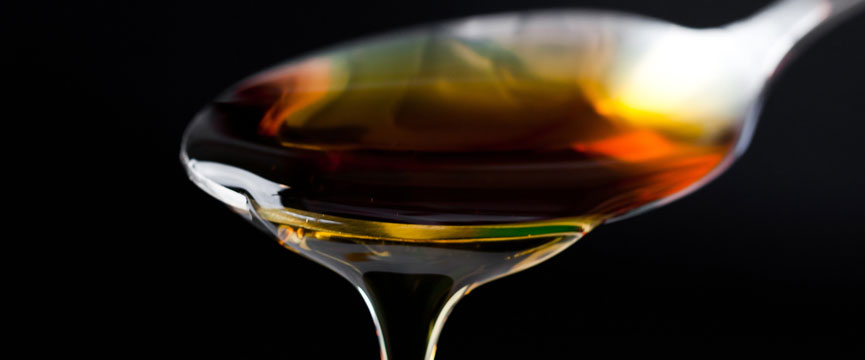
 If you work in the hospitality industry, you know that details make all the difference. A decent dessert and a truly memorable dining experience are completely different things. Syrup is one of those essential ingredients that every professional chef and pastry chef must master.
In this article, we explain everything you need to know about syrup . We will also explore how high-quality Fruit in syrup can become your best ally in the kitchen to elevate your professional creations.
Table of Contents
What exactly is syrup?
Syrup is an aqueous sugar solution obtained by cooking water and sugar in specific proportions. This seemingly simple mixture is fundamental in professional gastronomy due to its many applications and its ability to preserve and enhance the flavor of fresh fruit.
The key lies in the sugar concentration (degree Brix) and the cooking point, which determine its texture, shelf life, and final use. Let’s look at all its characteristics in more detail:
Composition and densities
In a professional kitchen, there is no single recipe for it. Mastering the different densities is key to achieving different results:
- Light syrup: 20-25% sugar. Ideal for moistening sponge cakes, fresh fruit salads, or delicate fruits where long-term preservation is not required.
- Medium syrup: 30-35% sugar. It is the most versatile for preserving fruit, as it maintains a perfect balance between sweetness and the original flavor of the fruit.
- Thick or string syrup: 40-50% sugar. Its high sugar concentration and cooking point make it ideal for jams, frostings and high-end pastry preparations that require greater structure.
- Extra heavy syrup: More than 50% sugar. Used in special applications.
History of syrup: a thousand-year-old legacy
Syrup has its roots in ancient Persia and the Arab world. Its name appears to derive from the Arabic term “al-maybah,” which in turn comes from the Persian “mey be” (quince nectar). The word is also related to the Arabic verb “abara,” meaning to squeeze or press.
In short, the etymology accurately reflects the original idea: the sweet liquid resulting from squeezing or extracting juice, which over time came to refer to the sugary syrup we know today.
It was the Persians who developed sophisticated techniques for preserving fruit in sugar, which later spread throughout the Mediterranean.
Expansion in Europe
During the Middle Ages, with the arrival of cane sugar in Europe via trade routes, syrup became a fundamental method of preservation. Medieval monasteries perfected these techniques, laying the foundations for modern confectionery.
Evolution in the professional kitchen
In the 19th century, with the industrial revolution and the democratization of sugar, syrup became established as an essential technique in European haute cuisine. Especially in French pastry, where master pastry chefs like Antonin Carême codified its uses and applications.
Syrup preparation process
Basic professional technique
The process of making syrup requires considerable precision, especially in professional settings. Let’s look at all the steps:
- Step. Ingredient selection: quality water and refined sugar (or alternatives depending on the application).
- Step. Exact ratio: precise measurement of water and sugar according to the desired syrup density.
- Step. Controlled cooking: Gradually heat, stirring until completely dissolved.
- Step. Temperature control: monitoring with a thermometer to reach the exact point.
- Step. Cooling: This process must be controlled according to the subsequent use.
Professional uses of fruits in syrup in Horeca establishments
These are some of the main applications in professional cooking and baking:
In professional pastry making
- Bases and Fillings: Fruits in syrup are perfect for filling Tatin tarts, clafoutis, or for accompanying a panna cotta. The syrup itself is perfect for soaking cakes, adding moisture and flavor.
- Decoration and plating: A slice of kiwi or maraschino cherries are perfect for a flawless visual finish and a touch of flavor that elevates any dessert, from cheesecake to black forest cake.
- Professional ice cream shop: Chopped fruits in syrup are used as a topping in artisanal ice creams and sorbets, as they do not crystallize at low temperatures like fresh fruit.
- Premium fillings and decorations: They are used in mille-feuille, éclairs, and other high-end pastry creations. Bright, tempting fruits are used in the decoration.
For professional savory cooking
- Gourmet side dishes: Have you ever tried duck breast with candied apples or pork tenderloin with dried apricots? The sweet contrast balances the fat and enhances the flavor of the meat. It’s often used with poultry.
- Foie gras and pâtés: It’s a classic contrast that never fails. You can use different fruits in syrup and success is guaranteed.
- Salads with character: You can add oranges or maraschino cherries to a salad with goat cheese, nuts, and a bold vinaigrette. It will add a surprising and delicious touch.
- Sweet and sour sauces: Fruit in syrup allows for a perfect balance, especially in game dishes.
- Fusion cuisine: We can see fruits in syrup in signature dishes with impressive results.
In high-end cocktail bars
- Cocktail decoration: Cherries in syrup allow for an attractive and impeccable presentation in numerous cocktails.
- Garnish premium: Forget dried fruit. A quality cherry or a slice of orange in syrup is the perfect finishing touch for a perfect cocktail.
- Syrup making: Itself is a fantastic flavor base for creating custom syrups in your mixology creations.
What benefits do professionals get from fruits in syrup?
These are the main advantages of using fruits in syrup in professional cooking and baking:
Operational efficiency
- Time savings and zero waste: Forget peeling, cutting, and cooking fruit. Packaged fruit in syrup is ready to use, allowing you to optimize your team’s time and eliminate waste of fresh produce.
- Availability all year round: Break the seasonal barrier with consistent quality and offer your customers fruit desserts anytime.
- Standardization and uniform quality: Each piece has the same size, texture, and sweetness level. This guarantees consistent results that your customers will recognize and appreciate.
- Profitability: You can control your costs precisely by knowing how much each container costs and what its yield is.
Quality guaranteed
- Optimal preservation: They always retains its organoleptic properties.
- Food safety: It is a pasteurized and controlled product.
- Ideal texture: It offers the perfect firmness for professional preparations.
Creative versatility
- Different formats: They can be used in halves, whole, in slices…
- Personalization: They can be adapted to any creation, whether sweet or savory.
- Constant inspiration: You can use it in endless culinary creations.
Why choose Lazaya candied fruit?
As we’ve seen, syrup is much more than just sugar and water: its history, technique, and creative potential. For professionals, having high-quality fruit in syrup isn’t a luxury. It’s a strategic necessity to stand out from the competition.
Lazaya has been producing canned fruit for professionals for over 80 years and has become one of their favorite brands. Our catalog features canned cherries, apples, and oranges in syrup, available in various sizes and Brix levels (14-20), whole or halved, pitted or unpitted, with or without stems, and with or without added sugar.
Other fruits in syrup that professionals can purchase include kiwis, strawberries, and blackberries. Strawberries and blackberries are available whole, and kiwis in slices, all with varying Brix levels (from 14 to 20), with or without sugar or in water, and packaged in tin cans.
You just have to contact us if you need a custom order. We’d be happy to help you elevate the quality of your products. Let’s talk?