(1 votes, average: 5.00 out of 5)
 Loading...
 Breakfast is the service that most often influences a hotel’s rating. A good buffet or a breakfast served at the table leaves a lasting impression, and fruit jam in HORECA plays a very important role. It’s economical, versatile, keeps well, and allows you to create unique dishes without complicating the kitchen.
In this post, we’ll see how professionals use it, which flavors work best, what formats are best to buy it in, and which are the most cost-effective. If you want to know everything about fruit jam and to create irresistible products for your customers, stay with us.
Table of Contents
How is fruit jam used in hotel breakfasts?
Fruit jam is much more than just a condiment; it’s a European breakfast staple and a culinary resource with applications ranging from pastries to cocktails. Here’s why no top-tier hotel can afford to be without it:
- Perception of quality: A wide assortment of premium jams reinforces the image of a hotel that pays attention to detail.
- Operational simplicity: These are ready-to-serve products with a long shelf life and precise cost control.
- Versatility: They work equally well on artisan toast as they do as a crepe filling, yogurt topping, or base for sweet sauces.
Hotels that excel at breakfast don’t just place a bowl of jam next to the toast. They incorporate it into various dishes to offer guests the best possible dining experience. Let’s look at its main uses:
At the buffet
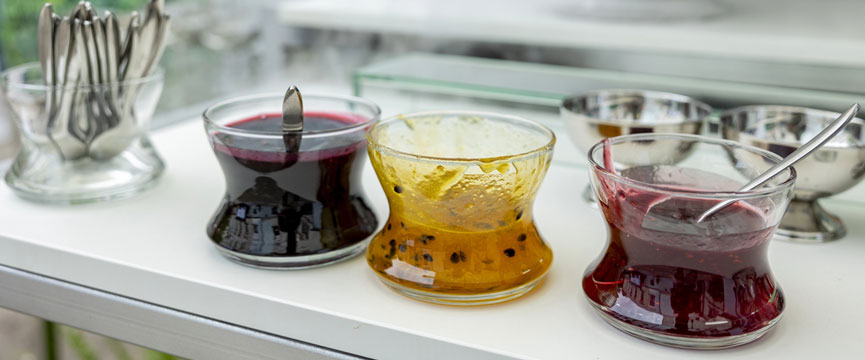
A classic use is for continental or à la carte breakfasts. The jam is presented in jars, bowls, or dispensers alongside artisan sourdough breads, brioches or freshly baked croissants. Here, presentation is what matters most, along with the visual and gustatory quality of the fruit. A fruit jam with visible pieces and good color sells itself.
In yogurts and cereals
Jams are increasingly used as a premium topping for natural yogurts, kefir, chia or porridge made with oats. This allows the customer to personalize their breakfast with authentic flavors instead of artificial syrups.
Homemade pastries and cakes
Hotel pastry chefs use jam as a filling or topping for cakes, tarts, pastries, crepes, and waffles. By using a professional product, they guarantee a consistent flavor, a texture that withstands baking without losing its properties, and year-round availability.
In savory pairings and haute cuisine
Current gastronomic trends have brought the sweetness of fruit to savory dishes. It is becoming increasingly common to include red fruit jams on cheese boards local and international toast with ham or brunch. They can also serve as a base for vinaigrettes, reductions and sauces on the hotel’s lunch and dinner menus.
In hot products and pastries
Kitchen staff use it to fill croissants, pastries, and sponge cakes, to top tarts, and to accompany pancakes, waffles, and French toast. A spoonful on yogurt or fresh cheese transforms a simple ingredient into a sophisticated dish.
In the à la carte service and the rooms
At breakfast served at the table or in the room, the jam is offered in single-serving packets or small glass containers. It’s a detail that guests perceive as a sign of quality.
Creative uses in the buffet and room service
- “Build your own” yogurt and granola stations with red berry fruit jam to add color and antioxidants.
- Mini pre-baked tartlets that are filled at the moment with apricot jam and decorated with fresh fruit.
- Non-alcoholic brunch cocktails sweetened with kiwi jam syrup diluted in sparkling water.
- Express glaze for pastries: simply mix peach jam with a little hot water and brush croissants before serving.
Fruit jam in the Horeca sector: what formats do professionals use?
The choice of format affects the cost per serving, waste, and the convenience of service.
Single-dose (Tubs, mini-jars or blisters)
This format is the undisputed king of hygiene and strict cost control, since they are comfortable, hygienic, and easy to control. They work well in hotels with high turnover or in-room breakfasts, although the cost per serving is the highest and they generate more waste. It’s the ideal option for room service, for guest picnics or for busy buffets where speed of service is sought.
Single-dose packaging prevents cross-contamination, eliminates product waste, and facilitates comprehensive inventory management, allowing the purchasing department to calculate the exact cost per customer. Its profitability is low or medium and it is mainly used in room service and quick services.
Bulk format (buckets, cans or containers over 1kg)
The smartest and most cost-effective option for hotel central kitchens and modern assisted buffet dispensers. Buying in bulk is the optimal choice for professionals who use large quantities of product to fill daily pastries, prepare menu desserts, or stock the large, elegant presentation bowls at the buffet. It drastically minimizes the cost per kilo and reduces waste, aligning with the hotel’s sustainability policies. Its profitability is very high and it is commonly used in buffet cooking, pastry making and fillings.
Medium-sized glass jars (250g – 400g)
They are specifically designed for boutique hotels, luxury rural accommodations or premium à la carte breakfast services where table aesthetics are paramount. It projects a premium image, ideal for boutique hotels or high-end breakfasts. It’s less cost-effective, but very powerful in terms of perception. A glass jar conveys an aura of craftsmanship, freshness, and meticulous attention to detail. It’s the perfect format to place directly on the diner’s table, creating a cozy yet exclusive atmosphere. It is mainly used in boutique and premium hotels.
Fruit jam ranking: most profitable flavors
To create this ranking, we will take into account three criteria:
- Customer acceptance.
- Versatility of use for the professional.
- Profitability for the establishment.
Strawberry jam
It’s a clear favorite and generates the fewest complaints. It can be enjoyed on its own, in pastries, and with dairy products. Its extremely high turnover guarantees zero waste. It’s the most cost-effective per volume. It’s widely used in general buffets, as a filling for in-house pastries, and for classic breakfasts.
Peach and apricot jam
They are very versatile and work perfectly on toast, in fillings, and in glazes. Apricots are especially valuable in pastry making, where they are used as a glossy glaze. They offer an excellent balance between cost and use. They are widely used in traditional continental breakfasts and as a sweet topping for yogurt.
Red berries
Raspberry or blackberry jams add color, intense flavor, and a premium touch without breaking the bank. They are visually appealing on buffets, and professionals frequently use them in yogurts and cakes. They are especially used in premium pastries, brilliant cake decorations and accompaniment on cheese boards.
Orange
A classic that resonates with international clients. It boasts high profitability within its own niche and enjoys good turnover in hotels catering to foreign tourists. It’s widely used in à la carte breakfasts and hotels with a large volume of international customers (especially British and German).
Kiwi, fig and apple
Their profitability comes not from volume but from perceived value. These jams are highly prized on cheese boards and gourmet platters, and they justify a premium breakfast.
The most effective combination for most hotels is a catering format in strawberry, peach or apricot jams as the basis of the service. It is also usually complemented with other jams such as kiwi, fig or red berries to create differentiation.
How to get more out of fruit jam
Let’s look at some recommendations for optimal use of fruit jams:
- Offer three or four rotating flavors instead of a huge range, to control stock.
- Serve in small glass or ceramic bowls refilling them frequently to maintain a good appearance.
- Propose simple pairings: jam with fresh cheese, with butter or with Greek yogurt.
- Change the flavor menu by season to refresh the perception of the buffet.
- Label the origin and highlight the artisanal quality when the product allows it.
Why buy your professional fruit jam in Lazaya?
At Lazaya, we have been working for hospitality professionals for over a century, and we understand the importance of having the highest quality ingredients in Horeca establishments. That’s why we select the best fruit and offer formats adapted to the actual use of hotels, restaurants, and bakeries, with a quality-price ratio that improves profit margin per serving without compromising on flavor.
If you want to surprise your customers from the very first breakfast, explore our catalog and choose the flavors and formats that best suit your establishment. A good fruit jam in the Horeca sector is one of the simplest and most cost-effective ways to enhance your customers’ experience. Don’t hesitate to contact us to resolve any doubts.