Loading...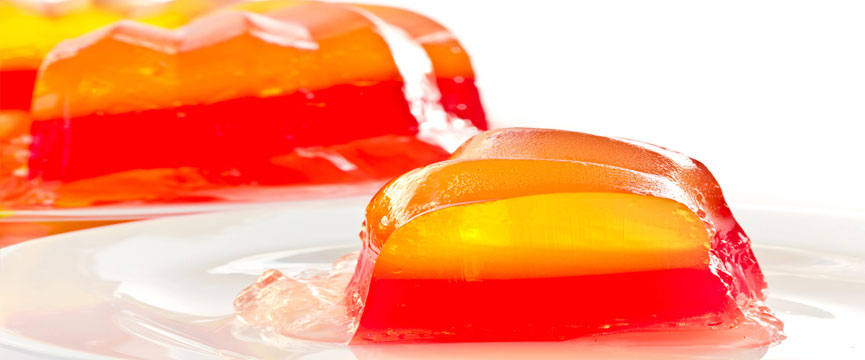
 Jelly fruit has become a fundamental ingredient in modern professional kitchens, primarily due to its versatility, consistency, and a color, shine, and texture that undoubtedly captivate diners. From plated desserts to haute cuisine decorations, including hotel buffets and industrial pastry making, Jelly fruits are essential in any Horeca establishment; however, not all gelatins perform equally well, nor are all formats suitable for every application.
In this post we are going to analyze in detail Jelly fruits for the hospitality industry. We’ll explore its various formats, how professionals use it, and their key criteria for choosing the most suitable option for their creations. Stay with us if you want to learn interesting things about this magnificent ingredient.
Table of Contents
What is jelly fruit and why it is so important in the hospitality and pastry industries
Jelly fruit is a preparation made from fruit juice or pulp, sugar, and gelling agents that give it a firm yet elastic texture. Unlike jam, it has a more translucent structure and a clean cut, making it a visually striking decorative element.
It is not just a simple candy, as it has the ability to provide a dazzling shine and add vibrant colors without resorting to artificial decorations; in addition, it offers a contrast of textures that make it irreplaceable.
Professionals use it to break the visual monotony of baked goods, to top tarts and mousses, or to add a touch of fruity freshness to haute cuisine dishes. However, for it to successfully fulfill all these functions, the product must meet very specific technical specifications to avoid production losses and preservation problems.
These are the main reasons why professionals choose Jelly fruits for their creations:
- Aesthetic contribution: vibrant colors and natural shine that elevate the presentation.
- Distinctive texture: interesting contrast with mousses, sponges and creams.
- Cutting versatility: It allows for precise geometric shapes for creative plating.
- Display case stability: It maintains its structure for hours without losing its appeal.
Jelly fruits formats for the hospitality industry and pastry shops
At Conservas Lazaya, we offer our gelatins packaged in cans or plastic tubs. They are very easy to use: simply take the required amount from the container, heat it, and apply it to the product.
Professional uses of Jelly fruits
Pastry and confectionery
- Decorating cakes and pastries with colored cubes or sheets.
- Middle layers in mousses and bavarois.
- Fillings for chocolates and petit fours.
- Glossy finishes in signature pastry.
- Breakfast and brunch buffets.
- Served in bowls or trays as an accompaniment to toast.
- A visual alternative to traditional jams.
- Pair with yogurt, granola and fresh fruit.
- Restaurant and creative cuisine.
- Garnish for dishes of foie gras, cheeses and meats.
- A sweet counterpoint to savory dishes.
- It adds a touch of color to minimalist plating.
Catering and events
- It allows for easier transport and handling.
- Elegant presentation without the need for on-site preparation.
- Controlled portions that reduce waste.
How to choose the best Jelly fruits
Let’s look at the criteria that chefs and pastry chefs use to choose the Jelly fruits that best suits their needs:
Actual fruit content
A quality jelly fruit should have a significant percentage of fruit or natural juice. This means:
- Authentic and recognizable flavor.
- Natural color without the need for excessive artificial dyes.
- Greater perception of quality by the customer.
The gelatin should not compete with the flavor of the fruit, but rather act as a vehicle that enhances the flavors without interfering.
Gel texture and firmness
Depending on the application, you will need a firmer texture (for dicing) or a softer one (for layering and filling). The professional will check:
- Elasticity suitable for the intended use.
- Clean cut without crumbling.
- Stability at room temperature during service.
Stability in preservation
Jelly fruits for the hospitality industry must maintain its properties throughout its shelf life, meaning it should not exhibit syneresis (liquid exudation), have a stable color without oxidation, and maintain a consistent texture even after prolonged refrigeration. Furthermore, the gelatin must behave consistently from batch to batch. Variations in gelation can result in products with different textures, for example, some that are too soft and others that are excessively firm.
Behavior in the display case
In establishments with public exposure, gelatin must:
- Maintain shine for hours.
- Do not soften in ambient humidity.
- Maintain its shape without deformation.
The clarity of the gel is essential, since if any cloudiness is perceived, it reduces the visual impact and suggests low quality.
Resistance to melting
In hot buffets or environments with high temperatures, jelly fruit must maintain its shape without collapsing. Therefore, gelatin formulations for the hospitality industry have a higher melting point than those for home use.
Stability with acidic fruits
Acidic fruits (pineapple, kiwi, sour mango) contain protease enzymes that can degrade gelatin if it is not properly formulated. Professional jelly must be resistant to these enzymes or require the fruit to be cooked beforehand.
What do professionals look for in a Jelly fruits supplier?
Beyond the product itself, the supplier must offer certain guarantees that facilitate the professional’s operations. Let’s take a look at them:
- Batch-to-batch consistency: In professional hospitality, standardization is fundamental. Each batch must behave exactly the same as the previous one to guarantee predictable results.
- Variety of flavors and formats: A good supplier should offer a wide range of fruits in different formats adapted to each operational need, along with options with lower sugar content if the market demands it.
- Product descriptions must include:
- Ingredients and allergens.
- Nutritional values.
- Storage conditions.
- Usage recommendations.
- Supply capacity: The supplier must guarantee constant availability, reliable delivery times, and order formats adapted to each customer’s volume.
Why choose Lazaya Jelly fruits
As we’ve seen, Jelly fruit for the hospitality industry is much more than just a decorative element. It’s a tool that, if chosen correctly, improves product presentation, optimizes working time, and enhances the perceived quality of the establishment. Therefore, selecting the right supplier is essential if you want to build a strong brand image and more satisfied customers.
In Lazaya Preserved Fruit, with over eight decades of experience serving professionals in the Horeca sector, we offer gels and jellies in a variety of flavors, including apple, lemon, strawberry, pineapple, vanilla, and neutral. At room temperature, they can last between 12 and 60 months, making them available to professionals year-round. Available packaging includes plastic and tin.
Discover our catalog of gels and jellies if you want to elevate the quality of your desserts and surprise and retain your customers. If you have any questions or queries, we’ll be happy to help. Contact us.